Sindhi Wedding Rituals: Complete Guide to Ceremonies & Traditions
A definitive guide to every Sindhi wedding ritual — from Kacchi Misri and Berana Sahib to Palli Pallo, Pheras, Datar and Satyanarayan Katha — with meaning, timeline, food, songs, cost and regional variations.
By SindhiJodi Team
Last reviewed: November 2026
Sindhi weddings are among the most vibrant Hindu wedding traditions — a joyful blend of centuries-old customs, deep devotion to Jhulelal Sahib, folk music, and close family involvement. From the engagement rituals of Kacchi Misri and Pakki Misri to the sacred pheras, Palli Pallo and post-wedding Datar, every step symbolises unity, prosperity and lifelong commitment. This complete guide explains each Sindhi wedding ritual, its meaning, who performs it, and how modern Sindhi families — in India and abroad — celebrate today.
Sindhi wedding timeline at a glance
Traditionally, a Sindhi wedding spans 5–7 days. The exact schedule may vary between families, but a typical sequence looks like this:
| Day | Main ceremony | Purpose |
|---|---|---|
| Day 1 | Kacchi Misri | Private engagement between families |
| Day 2 | Pakki Misri (Kurmai) | Public engagement and gift exchange |
| Day 3 | Berana Sahib / Satsang | Devotional gathering for Jhulelal Sahib |
| Day 4 | Dev Bithana, Ghari Puja, Saanth | Home purification and haldi ceremony |
| Day 5 | Mehendi & Lada | Mehendi, folk songs and Chhej dance |
| Day 6 | Wedding day (Baraat, Hathialo, Palli Pallo, Pheras) | Sacred marriage ceremonies |
| Day 7 | Bidaai, Datar, Satyanarayan Katha | Farewell, welcome and blessings |
Pre-wedding rituals
1. Kacchi Misri — the first engagement
Purpose: To formally accept the alliance between the two families in a small, private setting.
Who attends: Immediate family and close elders only.
Items used: Misri (rock sugar), coconut, a shagun envelope, dry fruits.
Duration: 1–2 hours, usually at the bride's home.
The bride's family offers misri to the groom's family, signalling that the "sweetness" of the relationship has been accepted. This is considered the traditional Sindhi equivalent of a Roka ceremony.
2. Pakki Misri (Kurmai) — the official engagement
Purpose: To publicly announce the alliance to extended family and community.
Who attends: Extended family, close friends and community elders.
Items used: Sweets, clothes, jewellery, shagun, sagan tray, coconut, sacred thread.
Duration: Half a day, followed by lunch or dinner.
Also known as Kurmai, this larger ceremony is where gifts are exchanged, rings are often blessed, and both families formally welcome each other. Read our Roka & engagement guide for a deeper look at Sindhi engagement customs.
3. Berana Sahib / Berana Satsang
Purpose: A devotional ceremony dedicated to Lord Jhulelal Sahib — the community's patron deity — to seek blessings before the wedding.
Who performs it: A Sindhi priest (or a senior family member), joined by both families singing bhajans.
Items used: A framed image of Jhulelal Sahib, water (jal), a lit diya, akha (rice), palav (dry fruits), sweets.
Modern variation: Many NRI families conduct a shortened Berana at home or over video call with elders back in India.
4. Dev Bithana (Ganesh Sthapana)
Purpose: Invocation of Lord Ganesha at the start of the wedding festivities to remove obstacles.
Who attends: Bride's or groom's household, priest, and close family.
Duration: 45–60 minutes; the idol usually stays until the wedding concludes.
5. Ghari Puja & Navgraha Puja
Purpose: To purify the home and seek blessings from the Navgrahas (nine planetary deities) for a smooth wedding.
Who performs it: A priest, with the parents of the bride or groom.
Items used: Havan kund, samagri, ghee, akha, coconut, kalash.
Regional variation: In many Sindhi families from Ulhasnagar and Ahmedabad, Ghari Puja is combined with a small kuldevta (family-deity) puja.
6. Jenya (Janeu) — sacred thread ceremony
Purpose: The traditional sacred-thread ritual performed for the groom (where the family practises it).
Who attends: Groom, father, priest and close family.
Note: Not every Sindhi family performs Jenya; it depends on family tradition and lineage.
7. Saanth (also called Wanwas)
Purpose: A haldi, oil and sandalwood ceremony performed separately at the bride's and groom's homes for glow, protection and purification.
Who performs it: Married women of the family (bhabhis, aunts, sisters).
Items used: Turmeric paste, mustard or sesame oil, sandalwood, chandan, betel leaves.
Duration: 1–2 hours, often followed by a family lunch.
Modern variation: Combined into a single joint Haldi event by many couples marrying in destination-wedding format.
8. Mehendi & Lada
Purpose: The Sindhi equivalent of a sangeet — mehendi is applied on the bride's hands and feet, and everyone joins in singing traditional Lada (Sindhi wedding songs) and dancing the Chhej (a Sindhi folk stick dance).
Who attends: Girlfriends, cousins, aunts and both families.
Popular Lada themes: Songs praising Jhulelal Sahib, teasing the groom, and blessings for the bride.
Wedding day ceremonies
9. Baraat & Bride's arrival
The groom arrives with the baraat — a joyful procession with dhol, music and dancing family members. Soon after, the bride is escorted to the mandap by her close family. In many Sindhi families, maternal uncles play an important welcoming role, though the exact custom varies.
10. Hathialo (Hathiyalo)
Purpose: The couple's hands are ceremonially tied together with a sacred cloth — symbolising the union of two souls and two families.
Duration: A few minutes, right before the pheras.
11. Palli Pallo — tying the sacred knot
Purpose: The bride's dupatta (palav) is ceremoniously tied to the groom's stole, symbolising their union for seven lifetimes. This is one of the most iconic and emotional moments of a Sindhi wedding.
12. Kanyadaan
Purpose: The bride's parents formally give their daughter's hand in marriage — a sacred and emotional handover in Hindu tradition.
13. Agni Pheras & Saptapadi
Purpose: The couple takes seven sacred rounds (pheras) around the holy fire, followed by the Saptapadi — seven vows for duty, strength, prosperity, wisdom, progeny, health and lifelong friendship.
Duration: 45–90 minutes depending on the priest's style.
14. Sindoor & Mangalsutra
After the sacred pheras and Saptapadi, many Sindhi Hindu families perform the Sindoor and Mangalsutra rituals. The exact sequence and inclusion of these customs may vary slightly depending on regional and family traditions.
Post-wedding rituals
15. Bidaai — the emotional farewell
An emotional farewell from the bride's parental home. She traditionally throws back handfuls of rice as a symbolic gesture of repaying her parents for their love and care.
16. Datar (Dataar) — welcoming the bride
The bride is welcomed at the groom's home with aarti. In many families, she gently kicks over a pot of rice or steps into a plate of vermilion, symbolising abundance entering her new home.
17. Satyanarayan Katha
Performed by many Sindhi Hindu families within the first week of marriage, seeking blessings and prosperity for the couple. It is not mandatory but is a widely followed tradition.
18. Satawarah (optional)
A post-wedding family gathering observed by some Sindhi families and regions — usually a small get-together seven days after the wedding.
19. Gadjani / Reception
The formal reception hosted by the groom's family to introduce the bride to extended relatives and friends. Depending on family traditions, this can be a small dinner or a grand gala.
Traditional Sindhi wedding attire & jewellery
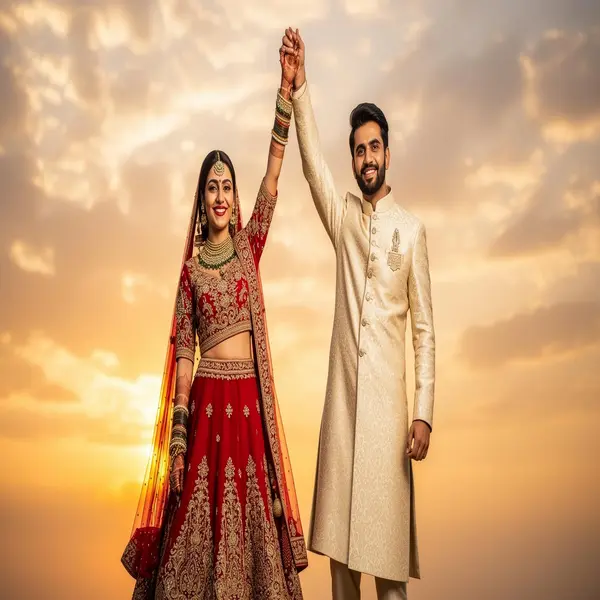
- Bride: Red or maroon lehenga, heavy gold jewellery, the iconic Sindhi nath (nose ring), tika, choodas (bangles), and payal.
- Groom: Cream or ivory sherwani with a maroon turban (pagdi), kalgi (feathered brooch), and mojris.
- Family: Women wear silk sarees or lehengas in jewel tones; men wear kurtas, bandhgalas or sherwanis.
Traditional Sindhi wedding songs — Lada & Chhej
Lada are folk songs sung during pre-wedding rituals — from the Saanth to the Mehendi. Popular themes include devotion to Jhulelal Sahib, welcoming the baraat, and playful teasing between the bride's and groom's sides. Chhej is the community's beloved folk dance, performed with wooden sticks in rhythmic circles — very similar in spirit to Gujarati Dandiya.
Traditional Sindhi wedding food
Food is at the heart of Sindhi celebrations. A typical wedding menu often includes:
- Sai Bhaji — spinach and lentil curry, a Sindhi staple.
- Dal Pakwan — the iconic breakfast dish, especially on Berana or Saanth mornings.
- Koki — spiced flatbread served with curd.
- Sindhi Kadhi & rice — tangy chickpea-flour curry with vegetables.
- Sweet Boondi & Kheer — traditional sweets served after the pheras.
- Mitho Lolo — sweet fried flatbread offered on auspicious days.
Sindhi wedding cost — what to budget
Wedding budgets vary widely, but as a rough guide for Sindhi families in India (2026):
- Intimate wedding (100–150 guests): ₹8–15 lakh
- Mid-scale wedding (300–500 guests): ₹25–50 lakh
- Grand or destination wedding: ₹75 lakh and above
Costs depend on venue, city (Mumbai and Dubai weddings are typically higher than Ulhasnagar or Ahmedabad), catering, jewellery, and whether ceremonies are spread over multiple days.
Regional differences in Sindhi weddings
- Ulhasnagar & Kalyan: Closest to traditional Sindhi rituals; strong Jhulelal devotion.
- Mumbai & Pune: Slightly modernised, often condensed to 3–4 days.
- Ahmedabad & Gandhidham: Blend of Sindhi and Gujarati customs, especially in food.
- Jaipur & Rajasthan: Influences from Marwari traditions and darbar-style receptions.
- Pakistan-origin Sindhis: Retain older Sufi-Hindu blended customs and specific Lada songs.
- NRI Sindhi weddings (Dubai, USA, UK, Singapore): Often condensed into 2–3 days, with virtual Berana or Satsang for elders in India.
Modern Sindhi weddings
Today's Sindhi couples often adapt tradition to their lifestyles:
- Destination weddings in Udaipur, Goa or Dubai with condensed rituals.
- One-day ceremonies combining Saanth, Mehendi and pheras into a single event.
- Court marriage followed by traditional rituals — common for interstate or NRI couples.
- Eco-friendly weddings with digital invites, biodegradable décor and smaller guest lists.
Things to prepare before a Sindhi wedding (checklist)
- Book the Sindhi priest (Sindhi Panditji) at least 2–3 months in advance.
- Confirm the Berana / Satsang venue and Jhulelal Sahib image or photo frame.
- Shortlist bride's and groom's outfits — plus family attire for 5+ functions.
- Arrange traditional Sindhi menu (Sai Bhaji, Dal Pakwan, Sindhi Kadhi, Boondi).
- Prepare Lada song playlist and, if possible, book a Chhej dance troupe.
- Pre-print the ritual timeline for both families and the venue team.
Frequently asked questions
Can a Sindhi wedding happen without Berana?
Berana is highly recommended as it invokes Lord Jhulelal's blessings, but some families — especially NRI or intercultural couples — perform a shortened version or a Satsang at home instead.
What is the difference between Kacchi Misri and Pakki Misri?
Kacchi Misri is the small, private engagement between immediate families, whereas Pakki Misri (Kurmai) is the larger, public engagement with extended family and formal gift exchange.
Why is misri (rock sugar) exchanged in Sindhi engagements?
Misri symbolises sweetness, purity and long-lasting acceptance. Exchanging it means both families welcome the alliance with a sweet, unbreakable bond.
What is Hathialo in a Sindhi wedding?
Hathialo (or Hathiyalo) is the ritual where the bride's and groom's hands are ceremonially tied together with a sacred cloth just before the pheras, symbolising their union.
What is Palli Pallo?
Palli Pallo is the ritual of tying the bride's dupatta to the groom's stole, symbolising their sacred lifelong bond. It is one of the most iconic moments of a Sindhi wedding.
Do all Sindhi families perform Sindoor and Mangalsutra?
Many Sindhi Hindu families do, but not universally. The exact sequence and inclusion depend on regional and family traditions.
Is Satyanarayan Katha compulsory after a Sindhi wedding?
It is not mandatory, but many Sindhi families perform Satyanarayan Katha within the first week for blessings and prosperity.
In what order do Sindhi wedding rituals take place?
The typical order is: Kacchi Misri → Pakki Misri → Berana Sahib → Dev Bithana → Ghari Puja → Saanth (Wanwas) → Mehendi & Lada → Baraat → Hathialo → Palli Pallo → Kanyadaan → Pheras & Saptapadi → Sindoor & Mangalsutra → Bidaai → Datar → Satyanarayan Katha.
A wedding rooted in heritage — begin your journey
A Sindhi wedding is much more than a series of ceremonies. Every ritual — from Kacchi Misri to Satyanarayan Katha — reflects the community's values of family, faith and togetherness. While modern celebrations may adapt the schedule, these traditions continue to connect generations and preserve Sindhi heritage.
If you're looking for a partner who shares these cultural values, join SindhiJodi — India's dedicated Sindhi matrimony platform. Browse verified Sindhi brides and grooms, learn more about the Roka ceremony, and read our guides on Sindhi matrimony, Sindhi brides and Sindhi grooms to begin your journey with confidence.