Sindhi Engagement Ceremony: Rituals, Significance & Modern Practices
Understand the Sindhi engagement ceremony — Kacchi Misri, Pakki Misri, sagai rituals, gift exchanges, attire, and how modern Sindhi families blend tradition with contemporary celebrations.
By SindhiJodi Team
The Sindhi engagement ceremony is one of the most cherished moments in a Sindhi wedding journey. It marks the formal acceptance of two families into a lifelong relationship. This guide explores every aspect of the engagement — its rituals, significance, attire, gift traditions and how modern Sindhi families personalise it today.
What is a Sindhi engagement called?
In Sindhi tradition, the engagement is broadly known as Misri — divided into two stages: Kacchi Misri (the smaller, intimate engagement) and Pakki Misri (the formal, larger announcement). Some families combine both into one event known as Sagai.
Kacchi Misri — the first commitment
This intimate ritual happens after both families have agreed to the alliance. The groom's family visits the bride's home with sweets, fruits, dry fruits, coconut, clothing for the bride, and gold ornaments. Misri (rock sugar) is exchanged as the symbolic seal — sweetness representing a sweet, prosperous union.
Items typically exchanged
- Coconut wrapped in red cloth
- Misri (rock sugar) in a silver bowl
- Gold ring or bangle for the bride
- Saree, lehenga or salwar suit
- Dry fruits, mithai (especially lal pera and gajak)
- Cash gift in odd numbers (₹101, ₹501, ₹1,001)
Pakki Misri — the formal engagement
This is the larger public ceremony attended by extended family, close friends and community members. The groom's family arrives with a baraat-like procession (smaller scale). The bride is dressed in a heavily embroidered red or pink lehenga. Both families sit together as the priest performs a brief puja and announces the alliance.
Key rituals during the engagement
1. Pheri or Tikka
The bride's father or eldest male relative applies a tilak on the groom's forehead — symbolising acceptance into the family.
2. Ring exchange
The couple exchanges rings in front of both families. In modern weddings, this often replaces the traditional bangle exchange.
3. Aarti
Both bride and groom are blessed with aarti by elderly women of the family.
4. Gift unveiling
Trays of gifts (called thaals) from both sides are unveiled — clothes, jewellery, sweets, dry fruits, household items.
5. Berana / Devotional singing
Many Sindhi families include Berana Satsang during or after the engagement — devotional songs in praise of Jhulelal Sai.
Sindhi engagement attire
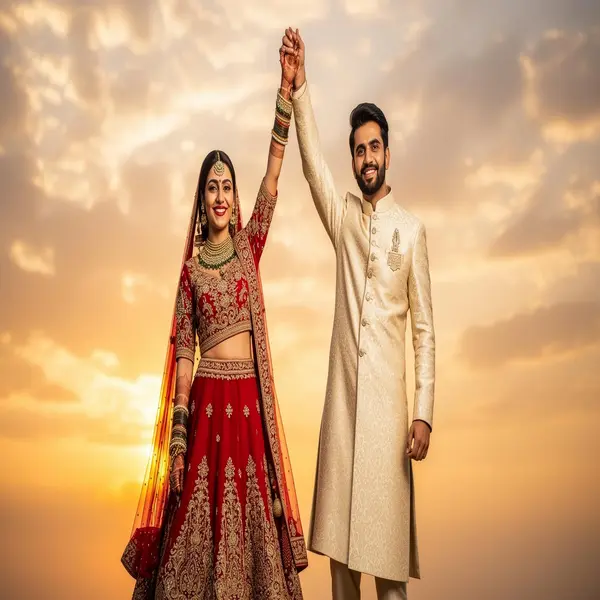
- Bride: Red, pink or maroon embellished lehenga or anarkali, gold jewellery, traditional jhumkas, light dupatta on the head.
- Groom: Cream sherwani or kurta-pajama with a matching dupatta and sometimes a turban for traditional setups.
- Mothers: Silk sarees in jewel tones (deep red, emerald, royal blue).
Modern twists Sindhi families are adopting
- Engagement parties with cocktails, DJ and choreographed dances replacing only-traditional ceremonies.
- Destination engagements in Goa, Udaipur or Rishikesh.
- Pre-engagement photoshoots instead of formal studio portraits.
- Themed décor — pastel + gold, vintage Sindhi, royal Mughal.
- Live Sufi or Sindhi folk performances (Sindhi Sufi music has seen a strong revival).
What does the engagement signify?
Beyond gifts and music, the Sindhi engagement is a spiritual and social commitment. It announces to the community that the alliance is sealed and any future negotiation must be honoured. In traditional Sindhi families, breaking an engagement is rare and considered a serious matter.
Planning your Sindhi engagement — practical checklist
- Fix the date with the family priest (auspicious tithi).
- Decide guest count for both Kacchi and Pakki Misri.
- Order misri, coconut, and ceremonial trays in advance.
- Book the venue 2–3 months ahead (especially for season weddings).
- Coordinate outfits between both families to avoid colour clashes.
- Hire a Sindhi-speaking photographer who understands the rituals.
Find your Sindhi life partner the right way
Every Sindhi engagement begins with finding the right match. Join SindhiJodi, India's dedicated Sindhi matrimony platform, to connect with verified Sindhi families across all sub-communities — Amil, Bhaiband, Lohana, Sahiti, Hyderabadi and more. Browse Sindhi profiles or read our complete Sindhi wedding rituals guide.